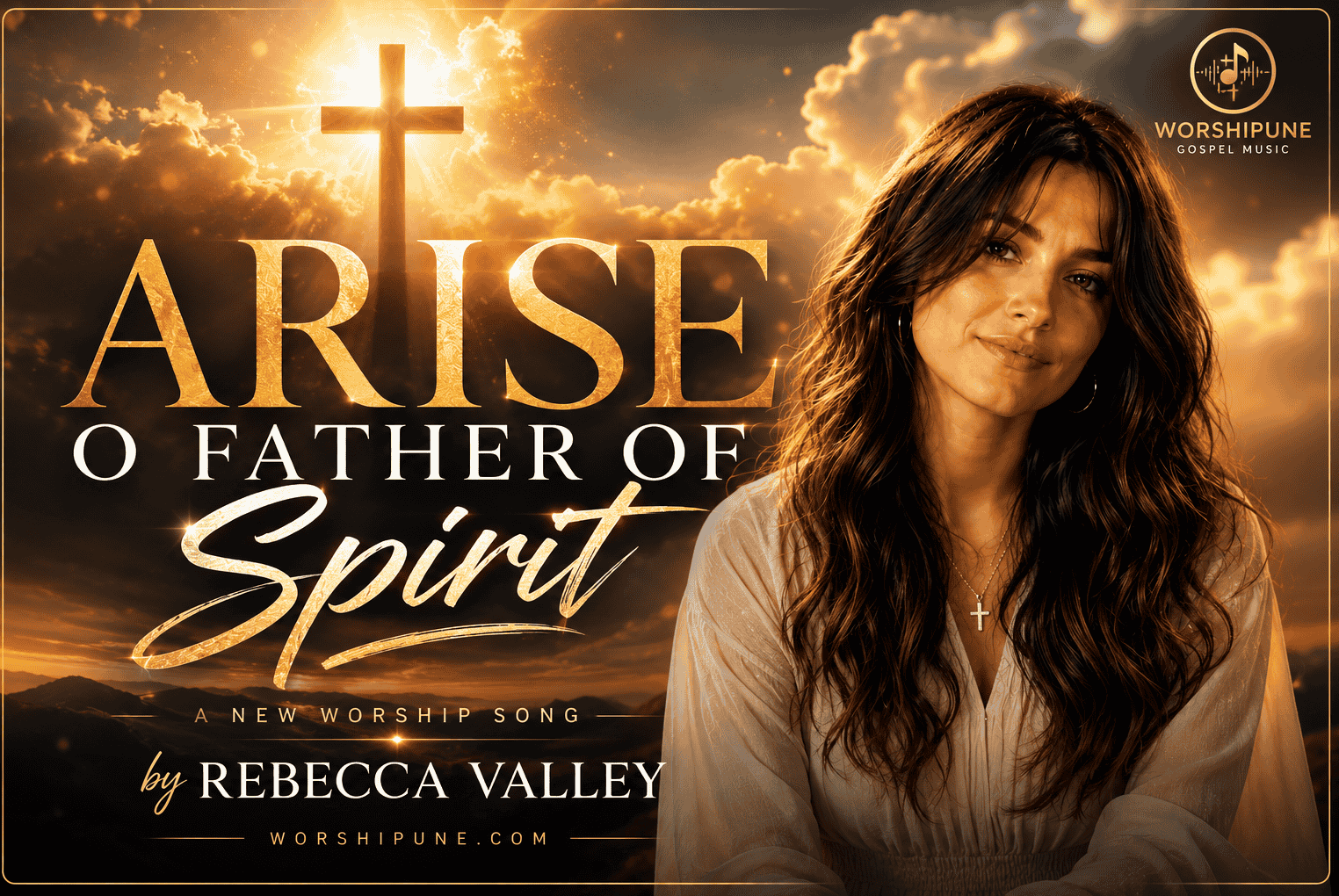
Arise O Father of Spirit: A Worship Song for Spiritual Awakening in 2026.
Watch the Official Worship Video
There are moments in worship when heaven feels close enough to touch—when the weight of God’s presence settles over a room and every heart begins to beat in unison with His. “Arise O Father of Spirit” was written for exactly those moments. Experience the full worship atmosphere in the official music video below, recorded live in New Jersey as we pressed into the heart of God for revival.
Introduction: When Your Spirit Feels Dry and Desperate for God
Have you ever sat in church, surrounded by people singing with raised hands, yet felt completely hollow inside? I have. There was a season, not long ago, when my worship had become mechanical, my prayers felt like they hit the ceiling and bounced back, and my Bible reading was more habit than hunger. I was going through the motions of faith while my spirit was quietly dying of thirst.
That season is what birthed “Arise O Father of Spirit,” one of the most personal worship songs for spiritual awakening I have ever written. It wasn’t born in a moment of triumph. It was born in a moment of desperate, raw hunger for the living God. I was tired of religious routine. I was tired of worship that entertained but didn’t transform. I was tired of a faith that looked good on the outside but felt empty within.
And I knew I wasn’t alone. Across our nation, believers are crying out for something real. We’re tired of performance-driven Christianity. We’re hungry for the manifest presence of the Holy Spirit. We’re desperate for a move of God that doesn’t just fill our calendars but fills our souls. This song is that cry set to music—a prayer for the Father of the Spirit to rise up and breathe life into dead places again.
If you’ve been searching for holy spirit worship music that goes deeper than surface-level emotion, this song was written for you. If you’ve been praying for breakthrough, for renewal, for a fresh touch from heaven, let these words become your anthem. Because the truth is, God never intended for us to live in spiritual dryness. He is the Father of the Spirit, and He is ready to arise in power once more.
The Story Behind “Arise O Father of Spirit”
Every song has a birthplace, a moment when heaven intersects with earth and something eternal is captured in melody and verse. For “Arise O Father of Spirit,” that moment came on a cold February morning in 2026, in a small prayer room in my home in New Jersey.
I had been walking through one of the most difficult spiritual seasons of my life. For months, I had felt a growing distance between my heart and God’s presence. I was still serving in ministry, still leading worship on Sundays, still writing music—but inside, I was spiritually exhausted. I had become what I never wanted to be: a worship leader who was leading others into an encounter with God while personally feeling disconnected from Him.
That morning, I woke before dawn with a heaviness I couldn’t shake. I didn’t open my laptop. I didn’t pick up my guitar. I simply fell to my knees beside my bed with my worn leather Bible and began to cry out to God. I didn’t have fancy words. I just whispered, “God, I need You. I need Your Spirit. I need to feel alive again.”
As I flipped through the pages, my eyes landed on Romans 8:15, “For you did not receive a spirit that makes you a slave again to fear, but you received the Spirit of sonship. And by him we cry, ‘Abba, Father.'” The words struck me with force. I realized that the Holy Spirit isn’t just a force or a feeling. He is the Spirit of the Father, sent to make us sons and daughters. He is the One who transforms our fear into intimacy, our dryness into overflow, our death into life.
And then it happened. As I sat there in the stillness, a melody began to rise in my spirit. It wasn’t loud or dramatic. It was gentle, like a whisper. The words came slowly at first: “Arise, O Father of Spirit, breathe upon these dry bones…” I grabbed my phone and recorded a voice memo, my voice trembling with the weight of what I was sensing. The song poured out in about 45 minutes, verse, chorus, bridge, everything. It was the fastest I have ever written a song, and yet it felt like it had been living inside me for years.
Over the next few weeks, I shared the rough demo with a few trusted friends and fellow worship leaders. The response was overwhelming. One friend told me she played it during her personal prayer time and wept for an hour, sensing God’s presence in a way she hadn’t in years. Another pastor friend said he used it during a midweek prayer meeting, and three people gave their lives to Christ that night. These weren’t coincidences. They were confirmations that this song carried something from heaven.
By March 2026, I knew this song needed to be shared beyond my living room. We recorded it in a small studio in New Jersey with a team of passionate worshippers, and the final version captures exactly what I felt that February morning: the cry of a desperate heart, the promise of a faithful God, and the power of the Holy Spirit to transform everything.
This is why I believe original worship songs for church matter so deeply. They aren’t just products to consume, they are testimonies of God’s faithfulness, invitations to encounter His presence, and weapons of worship in a world that desperately needs revival.
The Core Message and Theological Foundation
“Arise O Father of Spirit” is more than a song—it is a theological declaration rooted in the person and work of the Holy Spirit. Every line carries weight because it is anchored in Scripture, and every cry for awakening is grounded in the character of God. Below, I want to walk you through four foundational themes that make this song what it is.
The Hunger for God’s Presence
At its core, this song is a cry of hunger. It acknowledges that without the presence of God, everything else is meaningless. In Exodus 33:15, Moses says to the Lord, “If your Presence does not go with us, do not send us up from here.” Moses had seen plagues, parted seas, and manna from heaven, yet he knew that the greatest miracle was God’s presence dwelling among His people.
When I wrote this song, I was living out that same desperation. I didn’t want more programs, more conferences, or more Christian entertainment. I wanted Him. The song’s opening lines capture this hunger: “We are dry, we are weary, we are desperate for Your rain.” This isn’t performative spirituality. This is the raw, honest cry of a heart that knows its need for God.
For worshippers today, this theme is vital. We live in an age of distraction, where it’s possible to be surrounded by Christian content and yet spiritually starving. This song invites us to stop, to confess our need, and to ask the Father to send His Spirit once more.
The Fatherhood of God
One of the most powerful revelations in this song is that the Holy Spirit is not an impersonal force, He is the Spirit of the Father. Romans 8:15 tells us we have received the “Spirit of sonship,” and Galatians 4:6 says, “Because you are his sons, God sent the Spirit of his Son into our hearts, the Spirit who calls out, ‘Abba, Father.'”
This changes everything about how we approach God. We aren’t begging a distant deity to notice us. We are crying out to our Father, who has already given us His Spirit as a guarantee of our adoption. When we sing “Arise O Father of Spirit,” we are declaring that the same Spirit who raised Jesus from the dead is living in us, empowering us, and transforming us from orphans into heirs.
This truth has practical implications for every believer struggling with identity, fear, or rejection. You are not alone. You are not abandoned. The Father has sent His Spirit to dwell in you, and that Spirit is crying out on your behalf even when you don’t have words.
Revival for Today
The word “revival” gets thrown around a lot in Christian circles, but biblical revival is specific: it is the Spirit of God breathing life into dead things. Ezekiel 37 is the classic picture, dry bones, scattered and lifeless, suddenly rattling, connecting, and standing as a mighty army at the word of the Lord.
This song is built on that prophetic imagery. The bridge declares: “Breathe, O breathe, upon these dry bones; let Your army rise again.” I believe with everything in me that God wants to bring revival to His church in 2026, not just emotional meetings, but genuine transformation. Hearts turning back to God. Families being restored. Communities being changed by the power of the gospel.
Revival isn’t a relic of the past. It is the promise of our present. And it begins when God’s people get desperate enough to cry out, “Arise, O Father of Spirit.”
Expectation of Transformation
The final theological pillar of this song is expectation. We don’t worship a God who is distant or passive. We worship a God who responds to the cries of His people. Jeremiah 29:13 promises, “You will seek me and find me when you seek me with all your heart.”
When we sing this song, we aren’t just expressing emotion, we are building faith. We are declaring that transformation is possible, that dead things can live again, that the same Spirit who transformed the disciples from frightened fishermen into bold apostles is still at work today. This song is a weapon of worship for anyone believing God for personal breakthrough, family restoration, or national revival.
Lyric Breakdown: The Heart Behind Every Line
I want to take you inside the writing process and show you what each section of this song means spiritually. Rather than posting the full lyrics, I’ll share key lines and the heart behind them.
Verse 1: The Confession of Need
- “We are dry, we are weary, we are desperate for Your rain.”
This opening line was the first thing I sang that February morning, and it came straight from my own experience. I was dry. I was weary. And I was finally desperate enough to admit it. Spiritually, this verse is about honesty before God. We can’t receive what we pretend we don’t need. The prophet Isaiah says, “He gives strength to the weary and increases the power of the weak” (Isaiah 40:29), but that strength comes to those who admit their weakness.
This connects to the story of the woman at the well in John 4. She came for water, but Jesus offered her living water. She had to acknowledge her thirst before she could receive the gift. In the same way, this verse invites every worshipper to stop pretending and start confessing: “I need You, God. I can’t do this without You.”
Pre-Chorus: The Turning Point
- “So we lift our empty hands, we open up our hearts.”
The pre-chorus represents the response of faith. Acknowledging our need isn’t enough, we have to position ourselves to receive. Lifting empty hands is a posture of surrender. We’re not bringing our performance, our achievements, or our religious résumé. We’re bringing nothing but need, and that is exactly what God responds to.
James 4:10 says, “Humble yourselves before the Lord, and he will lift you up.” This pre-chorus is the musical expression of that verse. It’s the moment in worship when we stop singing about God and start singing to God, opening our hearts to whatever He wants to do.
Chorus: The Central Cry
- “Arise, O Father of Spirit, breathe upon these dry bones.”
The chorus is the anchor of the entire song. The phrase “Father of Spirit” is deliberate. In Scripture, God is called the “Father of spirits” in Hebrews 12:9, and the Holy Spirit is described as the “Spirit of the Father” in Matthew 10:20. This title captures the intimate connection between the Father and the Spirit, the One who sends, and the One who is sent.
The imagery of “dry bones” comes directly from Ezekiel 37, where God asks the prophet, “Can these bones live?” and then commands him to prophesy to the breath (Spirit) to enter them. Every time we sing this chorus, we are prophesying over our own lives, our churches, and our nation. We are declaring that the same Spirit who raised Jesus from the dead can raise anything that feels dead in us.
Verse 2: The Promise of Restoration
- “You restore what was broken, You revive what was lost.”
The second verse shifts from confession to declaration. Once we acknowledge our need and cry out for the Spirit, we begin to proclaim what God has promised to do. This isn’t wishful thinking, it’s faith-filled proclamation based on God’s character.
Joel 2:25 promises, “I will repay you for the years the locusts have eaten.” God is in the business of restoration. The years you feel were wasted, the relationships that were broken, the dreams that were shattered, none of it is beyond His power to redeem. This verse is for the worshipper who is ready to believe that God not only can restore but will restore.
Bridge: The Sound of Revival
“Breathe, O breathe, upon these dry bones; let Your army rise again.”*
The bridge is the most intense moment of the song musically and spiritually. It’s the point where personal prayer becomes corporate prophecy. When I wrote this, I was thinking about the early church in Acts 2—120 believers in an upper room, waiting and praying, when suddenly the sound of a mighty rushing wind filled the house. That wind was the breath of God, and it transformed frightened followers into world-changing apostles.
This bridge is a **prayer worship song for breakthrough** in its purest form. It’s not asking for comfort or convenience. It’s asking for the wind of the Spirit to blow through dead places and raise up an army of believers who will carry the gospel to the ends of the earth. Every time I lead this in worship, I feel the atmosphere shift. People stop singing casually and start praying desperately. That is the sound of revival.
#### Outro: The Lingering Presence
> *”Arise, arise, arise…”*
The outro is intentionally simple and repetitive. In worship, repetition isn’t redundancy—it’s meditation. As the music fades, the single word “arise” becomes a mantra of faith, echoing in the hearts of worshippers long after the song ends. It’s the sound of a heart that won’t stop asking, won’t stop believing, and won’t stop worshipping until God moves.
—
### How to Use “Arise O Father of Spirit” in Different Worship Contexts
One of the most beautiful things about worship music is its versatility. This song was written to be sung in living rooms and stadiums, in quiet mornings and loud nights. Here are five contexts where “Arise O Father of Spirit” can be powerfully used, along with practical tips for each setting.
#### Personal Devotion and Prayer Time
There is no substitute for personal worship. Before this song was ever shared publicly, it was my personal prayer anthem during that dry season. I encourage you to use it the same way.
– **Tip 1:** Play the song during your morning prayer time, but don’t just listen—sing along. Let the words become your own prayer. If you’re feeling dry, don’t skip the first verse. Lean into the confession of need. God meets us in our honesty.
– **Tip 2:** Use the bridge as a prayer prompt. When the song reaches *”Breathe, O breathe, upon these dry bones,”* stop the music and begin to pray out loud over the specific areas of your life that feel lifeless. Name them. Invite the Spirit to breathe on them.
– **Tip 3:** Journal while you listen. After the song ends, spend 10 minutes writing what you felt God saying to you. Personal devotion isn’t about performance—it’s about presence.
#### Small Group and House Church Worship
House churches and small groups are experiencing a resurgence, and this song is perfect for intimate settings where authenticity matters more than production value.
– **Tip 1:** Keep it acoustic. You don’t a full band. One guitar or keyboard and a heart hungry for God is enough. In fact, the stripped-down version often carries more power because people can hear each other singing.
– **Tip 2:** Pause after the bridge for group prayer. In a small group, you have the freedom to linger. After singing the bridge, invite group members to pray aloud for one another. Let the song become a launching pad for intercession.
– **Tip 3:** Share testimonies before you sing. If someone in the group has experienced God’s restoration, let them share briefly. Worship becomes more powerful when it’s rooted in real stories of God’s faithfulness.
#### Sunday Morning Church Service
For pastors and worship leaders planning Sunday services, this song fits beautifully into sets focused on renewal, commitment, or response.
– **Tip 1:** Place it after the sermon as a response song. If your message is about the Holy Spirit, spiritual hunger, or revival, this song gives people a way to respond with their whole hearts. The confession in verse 1 makes it ideal for altar calls or response times.
– **Tip 2:** Use it during a prayer service or night of worship. If your church holds quarterly prayer gatherings or worship nights, add this song to the setlist. The extended bridge allows for spontaneous worship and prophetic prayer.
– **Tip 3:** Consider using it during a season of fasting and prayer. Many churches observe 21 days of prayer in January. This song is the perfect anthem for that season, reminding your congregation why they’re fasting: not for religious points, but for the presence of God.
#### Youth and Young Adult Worship
The next generation is hungry for authenticity, and this song speaks their language. Young people don’t want polished performances—they want real encounters with God.
– **Tip 1:** Let the youth lead it. If you have young worship leaders in your ministry, empower them to lead this song. Their passion and hunger will be contagious to their peers.
– **Tip 2:** Create a “prayer room” experience. Set up a separate room with low lighting, cushions, and this song playing on repeat. Invite students to come and pray individually during a youth event. Sometimes the most powerful moments happen in the quiet.
– **Tip 3:** Connect it to social justice. Young adults care deeply about justice, mercy, and making a difference. Help them see that true revival produces transformed people who transform their communities. The “army” in the bridge isn’t just for church services—it’s for the streets, the schools, and the broken places of our cities.
#### Online Worship and Streaming
In an increasingly digital world, **online worship** is not a backup plan—it’s a frontline ministry. This song translates beautifully to digital platforms.
– **Tip 1:** Create a “worship moment” video for YouTube or Instagram. Film a stripped-down acoustic version in a beautiful setting and share it with a brief devotional. The intimacy of the song works well for camera.
– **Tip 2:** Use it as background music for prayer livestreams. If you host prayer meetings on Facebook Live or YouTube, play this song softly during transition moments or while people are praying in the comments.
– **Tip 3:** Encourage your online community to share their stories. When you post about this song, ask your followers: *”What dry bones is God breathing on in your life right now?”* Engagement happens when people feel invited into the story, not just marketed to.
—
### Bible Verses Related to “Arise O Father of Spirit”
The following Scriptures form the theological backbone of this song. I encourage you to meditate on them, memorize them, and let them shape your worship.
> **Ezekiel 37:4-5** — *”Then he said to me, ‘Prophesy to these bones and say to them, “Dry bones, hear the word of the Lord! This is what the Sovereign Lord says to these bones: I will make breath enter you, and you will come to life.”‘”*
This is the primary text behind the song’s central imagery. Ezekiel’s valley of dry bones is a picture of hopelessness—until God speaks. The Hebrew word for “breath” here is *ruach*, the same word for Spirit. When we cry out for the Spirit to breathe, we are asking God to do what only He can do: bring life to death.
> **Romans 8:15** — *”For you did not receive a spirit that makes you a slave again to fear, but you received the Spirit of sonship. And by him we cry, ‘Abba, Father.'”*
This verse is the heartbeat of the song’s title. We don’t serve a God who keeps us at arm’s length. We serve a Father who has given us His Spirit so that we can approach Him with confidence and intimacy. Every time we sing “Father of Spirit,” we are declaring our identity as sons and daughters.
> **Acts 2:1-4** — *”When the day of Pentecost came, they were all together in one place. Suddenly a sound like the blowing of a violent wind came from heaven and filled the whole house where they were sitting… All of them were filled with the Holy Spirit.”*
Pentecost is the prototype for revival. The early church wasn’t powerful because of their strategy or resources—they were powerful because the Spirit had come. This song is a prayer for another Pentecost, not just in church buildings but in homes, workplaces, and nations.
> **Psalm 63:1** — *”You, God, are my God, earnestly I seek you; I thirst for you, my whole being longs for you, in a dry and parched land where there is no water.”*
David wrote this in the wilderness, running for his life from King Saul. His circumstances were desperate, but his hunger for God was even greater. This verse captures the emotional tone of verse 1 in the song: the honest confession that without God, we are spiritually dehydrated.
> **Joel 2:28-29** — *”‘And afterward, I will pour out my Spirit on all people. Your sons and daughters will prophesy, your old men will dream dreams, your young men will see visions. Even on my servants, both men and women, I will pour out my Spirit in those days.'”*
This is the promise of inclusive, widespread revival. The Spirit isn’t reserved for pastors or worship leaders—He is poured out on *all* people. This song is for every believer, regardless of age, gender, or background, who is hungry for more of God.
> **John 7:37-38** — *”‘Let anyone who is thirsty come to me and drink. Whoever believes in me, as Scripture has said, rivers of living water will flow from within them.’ By this he meant the Spirit.”*
Jesus stood up on the last day of the Feast of Tabernacles—the great water-drawing ceremony—and shouted this invitation to the crowd. The “rivers of living water” are the Holy Spirit, and Jesus promises that those who come to Him will not just receive a drop but an overflowing river. This is the promise embedded in the song’s cry for rain.
> **2 Chronicles 7:14** — *”If my people, who are called by my name, will humble themselves and pray and seek my face and turn from their wicked ways, then I will hear from heaven, and I will forgive their sin and will heal their land.”*
This is perhaps the most quoted revival verse in Scripture, and for good reason. It tells us that revival begins with God’s people, not with the world. The condition is humility, prayer, seeking, and repentance. The promise is hearing, forgiveness, and healing. This song is the sound of God’s people doing exactly what this verse commands.
—
### Devotional Reflection: What Spiritual Awakening Means for Your Life Today
Revival isn’t just a historical event or a future hope—it is a present invitation. As you reflect on the message of “Arise O Father of Spirit,” I want to challenge you to consider what spiritual awakening looks like in three specific areas of your life.
#### Personal Application: Waking Up Your Own Spirit
The first place revival must happen is inside your own heart. You cannot give what you do not have. If your spiritual life feels like dry bones, I want you to know that God sees you, He hears you, and He is ready to breathe life into you again.
Start by asking honest questions: *When was the last time I truly felt God’s presence? What have I allowed to replace my hunger for Him? Am I running on religious fumes, or am I filled with the Spirit?* Don’t rush past these questions. Sit with them. Let the Holy Spirit speak to you through them.
Then, make a practical decision. Set a daily time to seek God’s face—not just to read your Bible or check off a spiritual to-do list, but to actually *encounter* Him. Turn on worship music like this song. Get on your knees. Open your mouth and pray out loud. Revival begins with one person deciding that enough is enough.
#### Family and Church Application: Awakening Your Household
The second sphere of revival is your closest relationships. Deuteronomy 6:4-7 commands parents to love God with all their heart and to teach His words to their children “when you sit at home and when you walk along the road, when you lie down and when you get up.” Revival in the home changes everything.
If you’re a parent, start praying this song over your children. If you’re married, invite your spouse into personal worship with you. If you’re part of a church community, be the one who initiates prayer, who shows up early to set up, who encourages your pastor, who serves without being asked. Revival spreads through people who are willing to be carriers of God’s presence.
#### Cultural and National Application: Awakening Your Nation
Finally, don’t limit your prayers to your own life. The early church turned the Roman Empire upside down because they believed God could do the impossible. What would happen if the church in America, in 2026, began to pray with that same faith?
Our nation is divided, confused, and spiritually starving. But the same Spirit who transformed the disciples can transform our culture. Pray for your city council. Pray for your schools. Pray for your neighbors who don’t know Jesus. And don’t just pray—go. Share your story. Invite someone to church. Show the love of Christ in practical ways. Revival isn’t just a feeling; it’s a movement of God’s people into the broken places of the world.
—
### Musical and Worship Atmosphere Review
From the first note, “Arise O Father of Spirit” was designed to create an atmosphere of holy desperation and expectant faith. Every musical choice was intentional, serving the spiritual journey of the song.
The song opens with a sparse piano motif—simple, haunting, and vulnerable. This mirrors the lyrical confession of dryness and weariness. I didn’t want lush instrumentation here because the heart of the song begins in emptiness. The piano plays in the upper register, creating a sense of longing and ache that draws the listener in.
As the pre-chorus builds, subtle ambient pads and a gentle acoustic guitar enter, representing the first stirrings of hope. The drums don’t kick in until the chorus, and when they do, they are powerful but not aggressive. I wanted the percussion to feel like a heartbeat—steady, strong, and alive. This is the moment the song shifts from confession to declaration.
The bridge is the musical climax. We layered multiple vocal harmonies to create a sense of corporate worship, as if an entire congregation is crying out together. The instrumentation swells with electric guitar swells and synth textures that evoke the sound of wind—an intentional nod to the Spirit as wind in Acts 2. The tempo remains steady at 72 BPM, allowing worshippers to enter into the moment without feeling rushed.
In a live worship setting, this song has proven to be incredibly versatile. It works with a full band, a simple acoustic setup, or even a cappella. The key of Bb is accessible for most vocalists, and the vocal range (A3 – F5) allows both male and female worship leaders to sing it comfortably.
The most powerful feedback we’ve received is that the song creates space for the Holy Spirit to move. Worship leaders have told us that after singing the bridge, they felt released to flow in spontaneous worship, prophetic prayer, and even physical healing. That is the highest compliment any worship song can receive—not that it sounds good, but that it makes room for God.
—
### Chord Chart and Worship Leader Resources
For worship leaders who want to incorporate **”Arise O Father of Spirit”** into their services, here are the essential details and resources you need.
**Song Details:**
– **Key:** Bb
– **Tempo:** 72 BPM
– **Time Signature:** 4/4
– **Vocal Range:** A3 – F5
– **Recommended Capo:** Capo 3, play in G shapes (transposed to Bb)
– **Year Written:** 2026
– **Location:** New Jersey, United States
**Chord Progression Overview:**
– **Verse:** Bb | Gm | Eb | F
– **Pre-Chorus:** Eb | F | Gm | Bb
– **Chorus:** Bb | Gm | Eb | F
– **Bridge:** Eb | F | Bb | Gm (repeated with building intensity)
– **Outro:** Bb | Gm | Eb | F (simplified, fading)
**5 Practical Worship Leader Tips:**
1. **Start quiet and build slowly.** Don’t rush the opening. Let the vulnerability of the first verse create space for people to be honest with God. If your congregation is used to high-energy openings, this song might feel uncomfortable at first—and that’s exactly the point.
2. **Teach the bridge before you sing it.** The bridge is the most powerful part of the song, but it only works if people know it. Consider having your worship team sing it as a special before introducing it to the congregation, or teach it line by line during a rehearsal night.
3. **Use the outro for spontaneous worship.** The repetitive “Arise, arise, arise” is designed to be a launching pad. Don’t feel pressured to end the song at a predetermined time. Let the Spirit lead you to linger, to pray, to prophesy, or to transition into another song seamlessly.
4. **Consider a key change for the final chorus.** If your team is comfortable, modulate up a whole step to C for the final chorus and bridge. This adds emotional intensity and gives the song a powerful finish. Just make sure your vocalists can handle the higher range.
5. **Pair it with songs that complement the theme.** This song works beautifully in a set with “Holy Spirit” by Bryan & Katie Torwalt, “Breathe on Us” by Kari Jobe, or “Spirit Break Out” by Kim Walker-Smith. Create a journey from hunger to fullness.
**Downloadable Resources Available:**
We are currently preparing PDF chord charts, lead sheets, and backing tracks for worship teams. If you would like to receive these resources as soon as they’re available, please email us at **hello@worshipune.com** with the subject line “Arise O Father of Spirit Resources.” We would love to partner with you in bringing this song to your congregation.
—
### Prayer Points: Praying Through “Arise O Father of Spirit”
The following prayers are designed to be prayed aloud, either individually or corporately. Let each one become your own as you seek God for awakening.
**Prayer Point 1: For Personal Revival**
> *Heavenly Father, I come to You today acknowledging my spiritual dryness. I have been going through the motions, and my heart feels distant from You. But I believe that You are the Father of the Spirit, and Your Spirit can breathe life into the deadest places of my soul. Arise in me, O God. Restore my first love. Fill me with holy hunger. I open my hands and my heart to You right now. In Jesus’ name, Amen.*
**Prayer Point 2: For Family Restoration**
> *Lord, I lift my family to You today. I pray that the same Spirit who raised Jesus from the dead would move in our home. Where there is division, bring unity. Where there is apathy, bring passion. Where there is fear, bring faith. Let my family become a dwelling place for Your presence. Breathe on us, O Father of Spirit, and let revival start under our roof. In Jesus’ name, Amen.*
**Prayer Point 3: For Church Awakening**
> *God, I pray for my local church and churches across our nation. We are tired of religious routine. We are hungry for Your manifest presence. Arise, O Father of Spirit, and visit Your people again. Let worship become encounter. Let preaching become prophecy. Let our gatherings become places where the broken are healed, the lost are found, and the dead come to life. Send revival, Lord. We are desperate for it. In Jesus’ name, Amen.*
Prayer Point 4: For National Transformation.
Father, I pray for the United States of America in 2026. Our nation is divided, confused, and spiritually starving. But I believe that no nation is beyond Your reach. Pour out Your Spirit on all people—on every race, every political party, every generation. Let sons and daughters prophesy. Let old men dream dreams. Let young men see visions. Bring awakening to our land, O God, and let Your kingdom come and Your will be done. In Jesus’ name, Amen.*
Prayer Point 5: For Global Revival
Lord, my heart breaks for the nations that have never heard Your name. I pray that the wind of Your Spirit would blow across every continent, every people group, every closed nation. Raise up an army of worshippers and witnesses who will carry the gospel to the ends of the earth. Let this song and a million songs like it become anthems of awakening in every language and every culture. Arise, O Father of Spirit, and let Your glory fill the earth. In Jesus’ name, Amen.*
Call to Worship: Will You Let the Spirit Arise in You?
As you come to the end of this article, I want to ask you a few honest questions. Don’t scroll past them. Sit with them. Let the Holy Spirit speak to you through them.
*What dry bones in your life need the breath of God today?* Is it your marriage? Your faith? Your calling? Your joy? Your peace? Name it. Don’t hide it. God already sees it, and He is not intimidated by your brokenness.
*Are you willing to get desperate enough to cry out?* Revival doesn’t come to the comfortable. It comes to the hungry. It comes to those who are willing to set aside their pride, their performance, and their pretense and simply say, “God, I need You.” Are you willing to be that person?
*Will you let this song become more than music—will you let it become your prayer?* The best worship songs for revival and renewal aren’t the ones that sound the most impressive. They’re the ones that become the soundtrack of a transformed life. I pray that “Arise O Father of Spirit” becomes that for you.
I don’t know what you’re walking through right now. I don’t know what battles you’re fighting, what losses you’re grieving, or what dreams you’re mourning. But I do know this: **the Father of the Spirit is still in the business of raising dead things to life.** The same God who breathed into Adam’s nostrils and made him a living being is ready to breathe into you. The same Spirit who transformed the disciples from cowards into martyrs is ready to transform you.
So don’t give up. Don’t settle for spiritual mediocrity. Don’t let another day go by without crying out for more of God. Arise, O Father of Spirit. Breathe upon these dry bones. Let Your army rise again.
And when He does—when you feel that wind, when you sense that presence, when you know that something has shifted—don’t keep it to yourself. Share it. Sing it. Shout it. The world is desperate for believers who have been genuinely transformed by the power of the Holy Spirit. Be one of them.

Rebecca Valley is an independent worship artist and founder of Worshipune, creating original worship music and song stories from Camden, NJ. Every song is written from real moment with Jesus. Connect at hello@worshipune.com